
Meet Be Manzini, Newham Poetry Prize Founder & Award Winning Writer
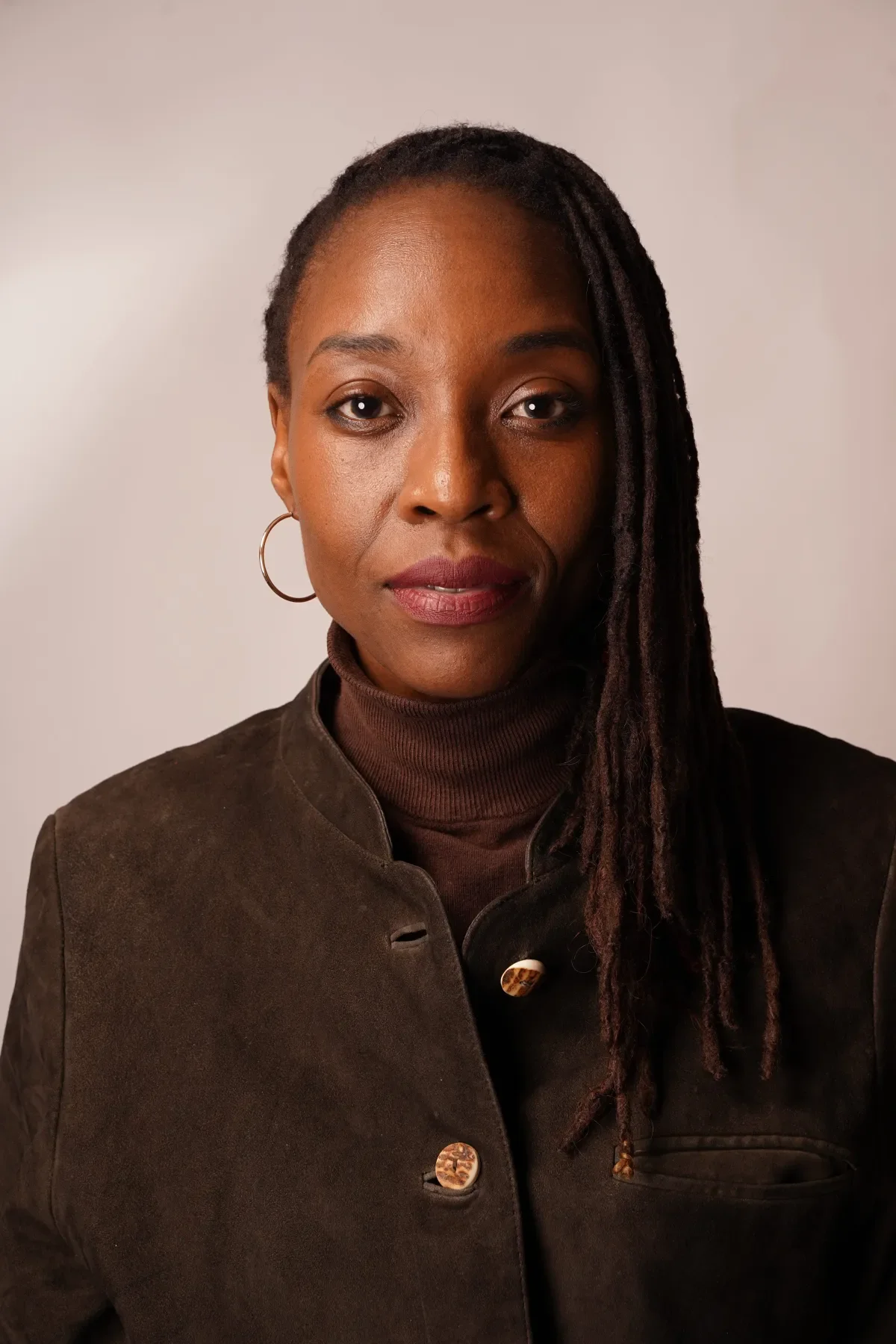
What inspired you to launch the Newham Poetry Prize, and why now?
The Newham Poetry Prize came about because I really wanted to find a way to reinvigorate poetry within the borough. I think arts activity as a whole, and particularly poetry, is still underrepresented here for a plethora of reasons and I think that the prize is something that people can and have been very excited about.
It's also a way for me to discover new voices and the community of poets that might be hiding their work under their bed or that haven't had the confidence or a reason to share their work.
I think, particularly now, poetry is more important than ever, poems and poetry has the power to move minds and hearts.
We are living in a time, especially post-pandemic, but also because of all of the information that we get all of the time via social media, can feel quite dark and quite isolating. So having the theme relate to ‘Newham’ in some way was an important element, it was really good for people to be able to see the place that they live, work or play in from another vantage point. It was really delightful to read all of the entries that came through from the writing competition we ran in the Spring of last year. This year we have evolved and are including spoken pieces as part of a digital archive that will preserve the work online.
The competition invites both emerging and established poets to write about Newham. What does the borough mean to you personally, and how has it shaped your own creative work?
I didn't want a demarcation between established and emerging writers; and actually what was very interesting was that the winners, some had published but not all of them had. In fact, one of them had never shared work before; they had come to one of the writing workshops that we put on to support people who want to enter, it was their first time reading in front of an audience, and the poem was really strong.
So I think that that's kind of testimony to the fact that if you put your time, effort and passion into what you're working on, we all have a decent shot at it. The borough means a lot to me, I’m three generations deep in Newham! I schooled here; primary, secondary, college, I went to university here; I have always chosen to return to Newham in terms of working and living. So it's quite a unique and special relationship that I have with it. It's such a vibrant place, there really is nowhere like it and having been here for such a long time, I've seen the changes across the years.
But what I'm always really fed by, is how people here hold their dreams and they make things happen, and not always in the easiest of circumstances. I guess my own work often talks to hope and resilience, even when things are challenging.
What was the vision behind incorporating free workshops into the Prize? How do you hope they impact those who may not identify as writers (yet)?
Oh, it was absolutely so beautiful. We had a sold-out workshop and it was so lovely, the comments afterwards and the feedback. I remember one participant saying they didn't even really realize how much they needed that space, and they really needed it.
We had comments like: ‘Now I feel like I can call myself a writer’. The majority of the people that came had never been to a poetry workshop before, so everybody learnt something new and left smiling. It was such an amazingly warm space and it was great to be able to facilitate that. I wanted to make it as accessible as possible, so the free workshops made sense and we will continue to do that as long as we can.
What continues to excite you creatively?
Oh, new challenges, always. I think that's what keeps you fresh, that's what keeps you pushing yourself. One of the things that I often do is try to write poems around my environment and where I am, because that's constantly changing and shifting and I'm constantly moving around.
It feels like poetry really is everywhere, so it doesn't take that much to excite me.
I'm inspired all the time, and I'm inspired by life; sometimes I can't keep up with all the ideas I have. That's also the benefit, I guess, of being Neurospicy; I describe it as having 10 tabs open all of the time.
I never have writer's block, and I know that some people have that as an issue. My issue is trying to keep up with my thoughts and making sure I write them down and document them and get them into a space and a shape that I'm happy with.
And not all poems are there to be shared. Sometimes it's the idea or the thought that comes to you that day. Most of the time you go back and revisit the work and you see that there is something quite juicy or delicious there, then you'll go into the edit phase.
I also do improvisational poetry. I recently did an event with Creative Newham and it was great to sit, absorb and be in the room for a celebration, and then present a poem at the end of it. So more of that please! That was really good to do.
What themes or voices have you seen emerge from this year’s submissions?
Oh, there was such a variety, actually. The theme was a reference to Newham, but there were poems that spoke about Newham of old and how it was and how things are quite different now, there were poems that really spoke to an emotional state of being, and then there were poems that were quite interior in their perspective. So it was the emotional, internal, and then looking at the external things that were happening. I think that was quite a strong theme.
As someone who facilitates nurturing creative spaces, what advice do you have for poets or artists who would like to explore poetry as a medium?
Stay curious. That is the best advice that I can give you and it sounds extremely simple but it is that: stay curious all the time. Be ready to learn. Have an open mind. I think beyond writing the poem, we need to re-humanize ourselves in a world that has become digital and mechanical and far removed from nature. We need to come closer and closer to our nature, and I think human beings are naturally curious, creative, and problem-solving. So keep all of those energies really close to you and nurture them.
You’ve long championed underrepresented voices through your work. What do you feel is most needed right now to help creatives from marginalised communities thrive?
I think in terms of helping creatives and marginalized communities thrive is really having the infrastructure. What I've seen over the years is often people have some early success or some level of success and then a number of things may happen.
They may no longer be in the right age bracket. They might not be getting enough money from their work. Even if they're published poets, I know so many published writers, so many creatives in fact, who can't dedicate themselves to their work fully because they just don't have the funds or the funding.
And I think that that's a wider systemic problem. I also think we need to really allow people from marginalized communities to explore whatever they want to.
Don't make assumptions. And I guess I'm saying this to the agents or the funders or the people who do have the power to green light a project. Don't have preconceptions of what people can do or what they should be doing based on their demographics.
Allow people to tell the stories that they want to tell. Often that is from lived experience, but it doesn't necessarily have to be. So I think don't put marginalised communities in a box, and we need more funding!
What are your hopes for the future of the Newham Poetry Prize and for the broader creative ecosystem in Newham?
My hopes for the future of Newham Poetry Prize and the creative ecosystem in Newham, do it again, is the very simple answer. But aside from that, I would love to see it grow. We had the capacity with a very small amount of money, which we made go really far.
We managed to have the support in place for people submitting workshops, we managed to have a celebration event, but we'd love to do it bigger, brighter, bolder. In terms of the ecosystem of Newham, I would love to see more joint-up working.
So part of my history is that I worked on a project called ‘Creative Capital’, and in that project I was the CPD coordinator and I was bringing organisations together who were predominantly in Stratford and broader East London. Some of the conversations and events and support that came out of that wouldn't have been possible without collaborative working and collaborative thinking.
One of the other projects that I worked on was at the Theatre Royal which involved hundreds of students based in Newham and that was in response to the Olympic Games coming. We had international performers come over from the US and have an exchange with them and I really felt, at that time, that young people and residents weren't really being seen and included in what was happening at that time in The Olympic Park, so I decided to get my cape on and do something about it! We managed to get some funding and do this wonderful project with lots of poetry coaches and hundreds of students resulting in a finale and performance. That was also a competition set-up in the form of a ‘Poetry Slam’, I think there is something about a ‘competition’ that gets people very excited.
So yeah, that's what I'm hoping for. I hope that the ecosystem in Newham, in terms of the art and creative industries, really continues to serve the community and also the artists who are here. We've got some amazing artists which I'm discovering more and more.
Anyone building their creative practice, just grab every opportunity that you can. I was really amazed to see how many people entered. If you can’t be a full time artist, you must still prioritise your work; whether that’s coming to one of our two hour workshops and having some dedicated time for your work or if you’re seeking inspiration, just dedicate a couple of hours a week consistently and it will all add up. The 1-2 poems you might write in that time, across the year, add up to over a hundred poems.
Poetry can change lives. The arts can change lives. It's so important to have spaces and places where we can do that in communion together, so that's what I want the future of the Poetry Prize to look like!
